On October 20, the “ESG Helps Boost Climate Adaptation Capacity in Developing Countries” exchange meeting, part of the “Standardisation Official Seminar on Enhancing Climate Change Adaptation Capacity for Developing Countries,” was held at Shenzhen University. The seminar was hosted by the Ministry of Commerce, guided by the State Administration for Market Regulation (Standardisation Administration of China), and jointly organised by the Academy of International Business Officials (AIBO) of the Ministry of Commerce, the International Standardisation Talent Training and Exchange Platform (Chengdu), and the Chengdu Institute of Standardisation. Over 50 participants, including government officials, experts, scholars from universities and research institutions, and enterprise representatives from China, Saudi Arabia, South Africa, Bosnia and Herzegovina, Cuba, Azerbaijan, Bahrain, Sri Lanka, Pakistan, and others, engaged in in-depth discussions on ESG policies and compliance in countries along the Belt and Road.
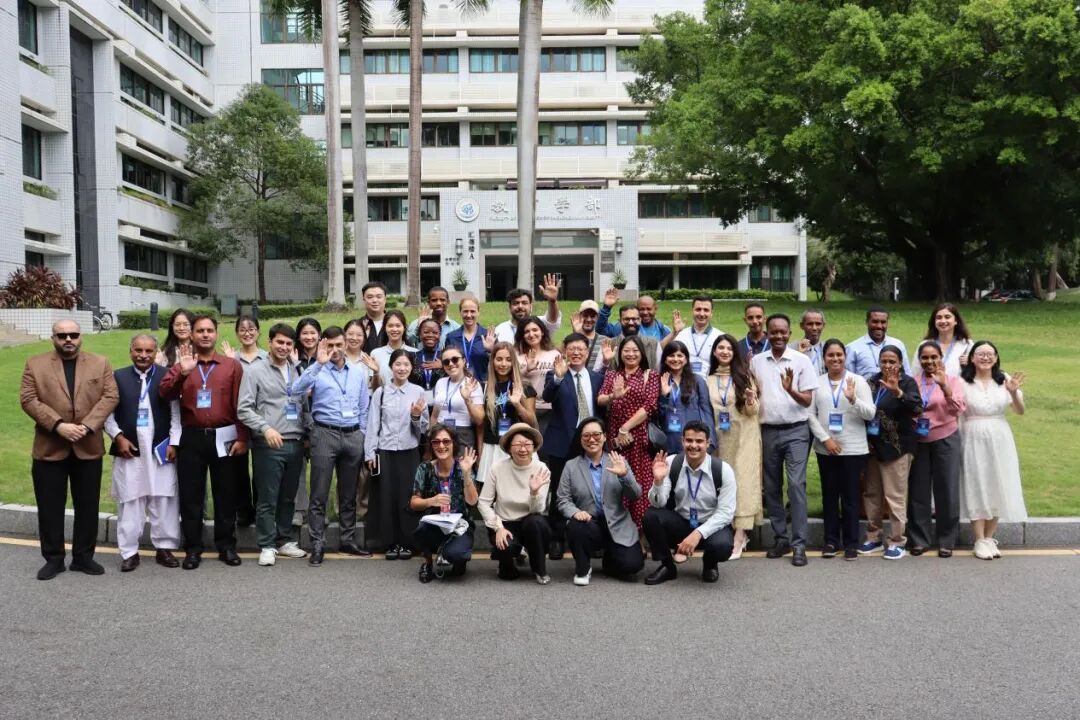
This seminar serves as an essential platform for implementing the Global Development Initiative and sharing China's achievements in meteorological modernisation. It aims to provide developing countries with standardised tools and methods to address climate change, supporting their transition to green, low-carbon development.
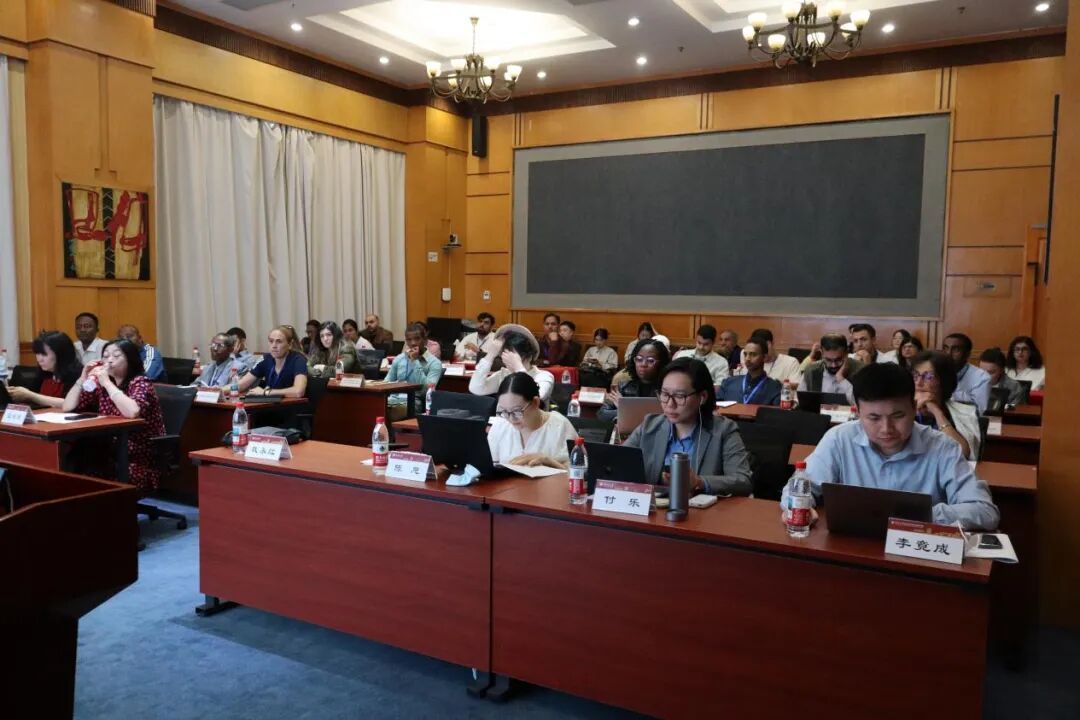
In his keynote speech, Professor Dai Yonghong, Dean of the School of Foreign Languages and Director of the Institute of Area and International Communication Studies at Shenzhen University, pointed out that the policy frameworks of emerging economies in the Environmental, Social, and Governance (ESG) fields exhibit characteristics of “common regulation but differentiated pathways.” He suggested promoting low-carbon infrastructure transformation through standard mutual recognition, technology transfer, and green finance, with Synergistic effects. This would provide compliance guidance for Chinese enterprises “going global” and inject new momentum into countries along the Belt and Road to achieve the UN Sustainable Development Goals by 2030.

Dr Chen Si, Assistant Professor at the Institute of Area and International Communication Studies at Shenzhen University, focuses on ESG compliance challenges in the critical mineral supply chains of the Belt and Road Initiative. She proposed a solution integrating a “localised framework + green technology + multi-stakeholder governance,” calling for the establishment of a “benefit-sharing and risk-sharing” mechanism involving resource-country governments, communities, and enterprises to balance resource and ecological security.

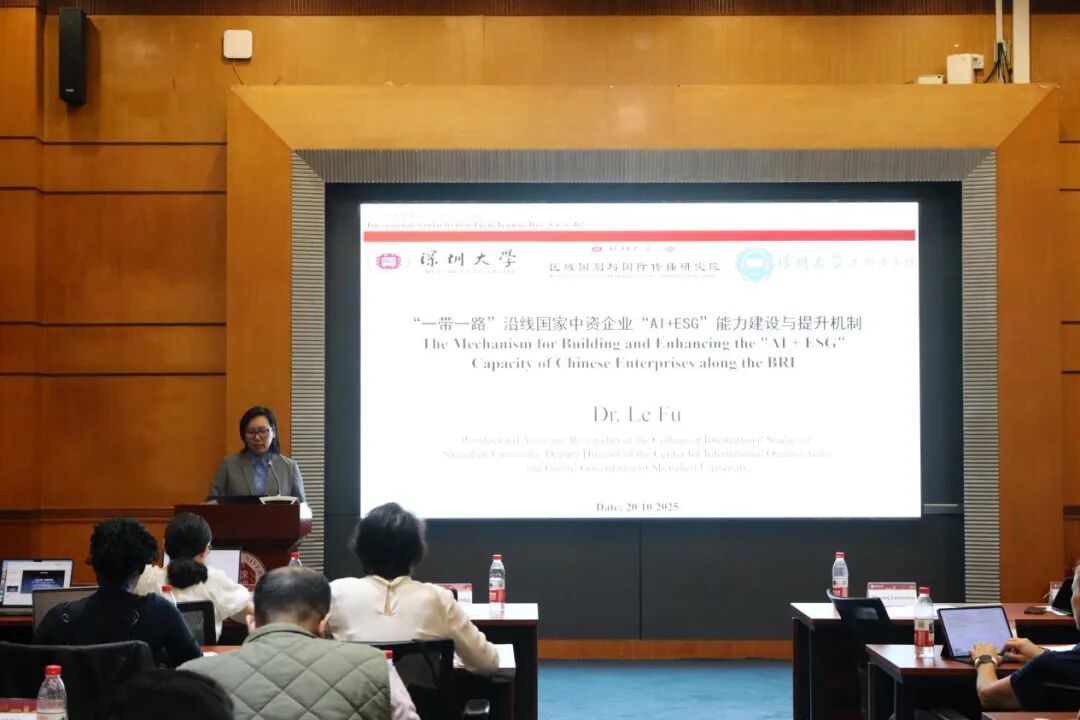
Dr Fu Le, Postdoctoral Associate Researcher at the School of Foreign Languages of Shenzhen University, proposed an “AI + ESG” capacity-building model. This model utilises artificial intelligence technology to digitise, enable real-time monitoring, and optimise environmental tracking, social responsibility assessment, and corporate governance. It aims to provide “going global” Chinese enterprises with digitalised, standardised, and replicable ESG management tools.
Enterprise representative Wang Yuyan, Chairperson of Shenzhen Wensen New Materials Technology Co., Ltd., shared a closed-loop green product innovation mechanism, “R&D-Production-Certification-Market,” based on practices in the chemical industry. She emphasised that only through the Synergistic effect of “policy incentives and market drivers” can breakthroughs in low-carbon processes and the substitution of green raw materials be achieved, ultimately unifying compliant operations with commercial value.
International representatives highly appreciated China's efforts in ESG compliance. Natanha Terblanche, a department director from the City of Tshwane in South Africa, was deeply impressed by the effectiveness of China's climate-related policy implementation and expressed hope to bring the Chinese experience back to her home country. Isa Rashed, a senior compliance expert at the Gulf Cooperation Council Standardisation Organisation (GSO), emphasised that addressing global issues such as climate change and pollution requires strong international cooperation. She praised the event, stating, “The most impressive parts were the case studies, which showed this framework in action. I believe this event is incredibly significant. We are seeing in this training how green policies can be turned into real-world actions.”
For many attendees, it was their first time in Shenzhen. Terblanche remarked, “I see there are a lot of green areas and parks. And very impressively, for me, it's a young city. It’s a city that's over 40 years old, but it's so developed.”
This exchange meeting not only introduced China's green development concepts but also showcased Shenzhen’s practical pathways in ecological civilisation construction. Zhuang Yuanyuan, Director of the International Centre at the Chengdu Institute of Standardisation, stated that, as one of the organisers, Shenzhen was chosen as the venue because many participants showed strong interest in the city's development. Simultaneously, her institute has established close cooperation with the Institute of Area and International Communication Studies of Shenzhen University and values its related research achievements in the ESG field.
It is reported that the 14-day seminar, in addition to thematic discussions, will organise participants to conduct policy dialogues, enterprise visits, and case studies in Shenzhen and Chengdu, aiming to promote a more profound and substantial development of the Belt and Road Initiative.
Authoritative media outlets, including Shenzhen Daily and Hong Kong Commercial Daily, have followed and reported on this external affairs activity.
First Proofreader: Zhang Lin
Second Proofreader: Fu Le
Third Proofreader: Dai Yonghong