On March 26-27, 2026, Professor Dai Yonghong, Dean of the School of Foreign Languages and Director of the Institute of Area and International Communication Studies at Shenzhen University, was invited to attend the second “Phewa Dialogue” held in Chengdu. The conference was co-hosted by Sichuan University and Tribhuvan University of Nepal, and organized by the Center for South Asian Studies at Sichuan University. Dozens of government officials, think tank scholars, and university researchers from China and various South Asian countries gathered to engage in in-depth discussions on the theme of “South Asian Development under Climate Change and Governance.” They explored regional economic integration, green energy transition, and sustainable development pathways, aiming to build consensus and contribute wisdom for deepening China-South Asia cooperation.
At the opening ceremony, remarks were delivered by Liu Chao, Vice President of Sichuan University; Dr. Khadga, Vice Chancellor of Tribhuvan University; H.E. Zhang Maoming, Chinese Ambassador to Nepal; H.E. Leela Mani Paudyal, former Nepalese Ambassador to China; Counselor Chen Wei from the Department of Asian Affairs of the Ministry of Foreign Affairs; and Mr. Dhanaraj Acharya, Mayor of Pokhara Metropolitan City, Nepal. They congratulated the convening of the dialogue and highly affirmed its theme. They unanimously agreed that against the backdrop of increasingly severe global climate challenges, this dialogue provided an important platform for South Asian countries to discuss joint efforts in addressing climate change, promoting green and low-carbon transitions, and achieving sustainable development. The opening ceremony was chaired by Yan Shijing, Deputy Director of the University Council and former Vice President of Sichuan University.
During the keynote speech session, presentations were given by Rong Ying, Chair Professor at the Center for South Asian Studies at Sichuan University; Vishnunath Paudel, Governor of the Nepal Rastra Bank; Dai Yonghong, Dean of the School of Foreign Languages and Director of the Institute of Area and International Communication Studies at Shenzhen University; and Aneel Salman, Research Fellow at the Islamabad Policy Research Institute.
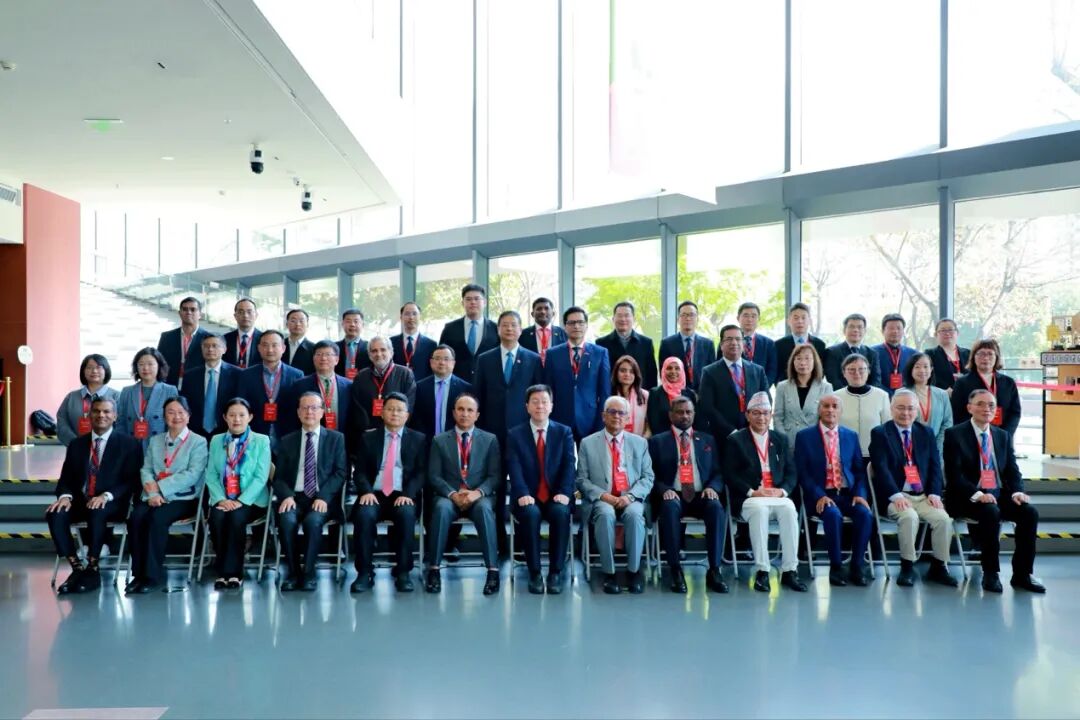
The dialogue featured three core topics: 1) “Cooperating to Address Challenges—Advancing South Asian Regional Economic Integration,” 2) “Green Powering Development—Clean Energy, New Energy, and New Industrial Chains,” and 3) “Achieving Sustainable Development—Transforming Traditional Lifestyles.” Dozens of experts from institutions such as Peking University, Tsinghua University, Sichuan University, Fudan University, Shandong University, the China Institute of International Studies, the China Institutes of Contemporary International Relations, the International Cooperation Center of the National Development and Reform Commission, the Shanghai Institutes for International Studies, the Yunnan Academy of Social Sciences, Jawaharlal Nehru University (India), University of Peshawar (Pakistan), Tribhuvan University (Nepal), the Centre for Policy Dialogue (Bangladesh), the Institute for Sustainable Development (Sri Lanka), Royal Thimphu College (Bhutan), and the Maldives National University engaged in in-depth discussions on issues such as regional integration under climate change pressure, the green technology revolution, and the transformation of traditional lifestyles.
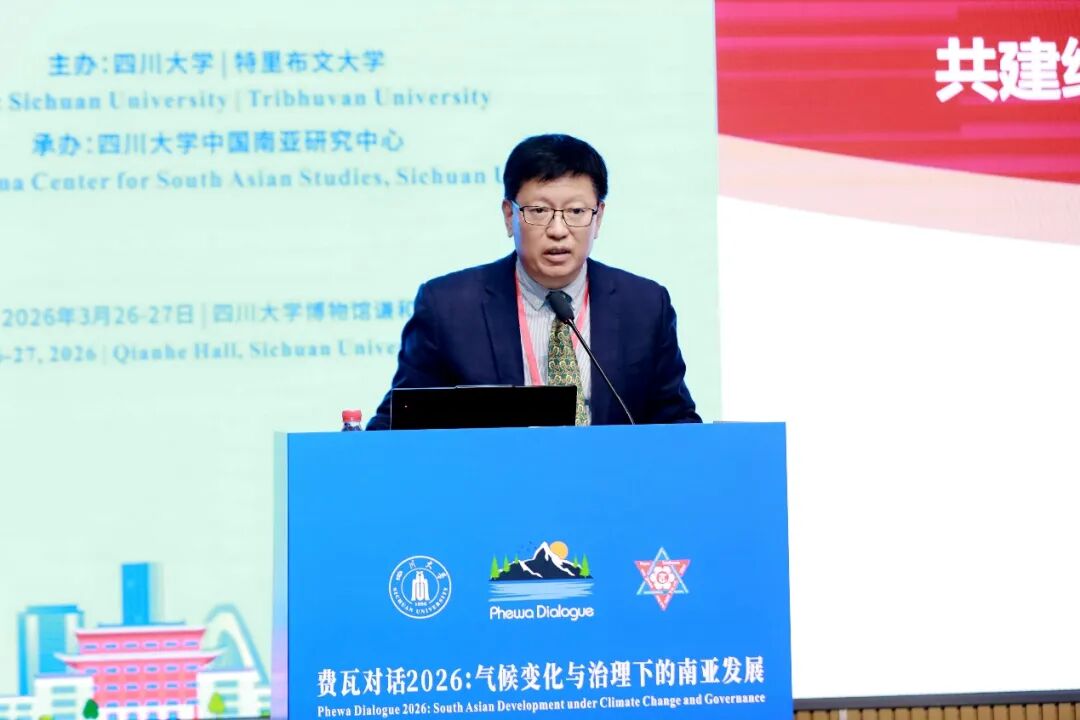
Professor Dai Yonghong Delivers Keynote Speech
Professor Dai Yonghong, Dean of the School of Foreign Languages and Director of the Institute of Area and International Communication Studies at Shenzhen University, was invited to deliver a keynote speech titled “Building a Green Home Together: A New Paradigm for Himalayan Regional Economic Cooperation Driven by ESG Policies” at the opening ceremony. Professor Dai pointed out that against the backdrop of increasing ecological pressures in recent years, ESG has become the “golden key” for balancing development needs and ecological red lines in the Himalayan region.
1. Why is ESG a “Mandatory Question” for the Himalayan Region?
The Himalayas stretch approximately 2,400 kilometers, serving not only as a crucial geographical link for countries like China, Nepal, and India but also as the “Water Tower of Asia” supporting nearly 2 billion people globally. Professor Dai Yonghong pointed out that the Himalayan region possesses a unique triple nature: First, it is an ecologically extremely sensitive zone: every plant and animal here acts as a regulator for the global climate system, and cannot withstand a “pollute first, clean up later” approach. Second, it is a zone of cultural diversity: multiple ethnicities and faiths converge here, requiring that development must respect this humanistic diversity. Third, it is a geopolitically sensitive zone: with multiple national borders, economic cooperation often has wide-ranging implications. Precisely because of this, a purely GDP-oriented, resource-exporting model of cooperation is bound to encounter obstacles here.
ESG, however, provides precisely a set of non-political technical language and evaluation standards based on international consensus: E (Environmental) requires that our infrastructure must be “green,” our energy mix must be “clean,” and industrial development must be “low-carbon.” S (Social) requires that our projects must benefit local communities, respect the rights of indigenous peoples, and narrow the wealth gap. G (Governance) requires that our cross-border cooperation must be transparent, compliant, and establish effective interest coordination mechanisms.
2. How Does ESG Reshape the New Logic of Regional Cooperation?
First Dimension: Environment—from “Conquering Nature” to “Symbiosis and Mutual Benefit.”
In the future, ecological restoration can itself become an economic growth point. For example, carbon sink trading: the Himalayan region’s abundant forest resources can transform “lucid waters and lush mountains” into “invaluable assets” through transnational carbon market mechanisms.
Second Dimension: Society—from “Ordinary Projects” to “Benefit Sharing.”
The core of ESG lies in inclusivity, requiring that the fruits of development are shared by the people. Simultaneously, ESG represents a higher-dimensional business logic. When enterprises view communities as partners and ecology as infrastructure, they gain not only brand reputation but also a more stable supply chain.
Third Dimension: Governance—from “Bilateral Games” to “Multilateral Coordination.”
The Himalayan region shares interconnected river systems and mountain ranges. Any unilateral action could have a butterfly effect, necessitating the establishment of transnational dialogue mechanisms at the governance level, such as cooperative drone patrols, cross-border disaster early warning systems, and joint glacier scientific research.
3. Towards a Himalayan ESG Cooperation Ecosystem
Looking forward, the following steps are proposed: First, establish “Himalayan ESG Information Disclosure Standards.” Second, set up a “Himalayan Green Development Fund.” Third, create pilot projects for “ESG Demonstration Corridors.”
Professor Dai Yonghong emphasized that the snow-capped mountains of the Himalayas have stood silent for millennia, yet they bear witness to everything. They have witnessed the prosperity of merchant caravans and the sorrow of glacial melt. Building a green home together is not only a requirement for our generation but also a solemn commitment to this sacred land.

First Proofreader: Han Ruimeng
Second Proofreader: Fu Le
Third Proofreader: Dai Yonghong